The Hat Man, the Old Hag and Other Dream Monsters
Inside the Nocturnal Bestiary on Memento Somnia: fifteen dream creatures, twelve protectors, and how much of the evidence holds up.
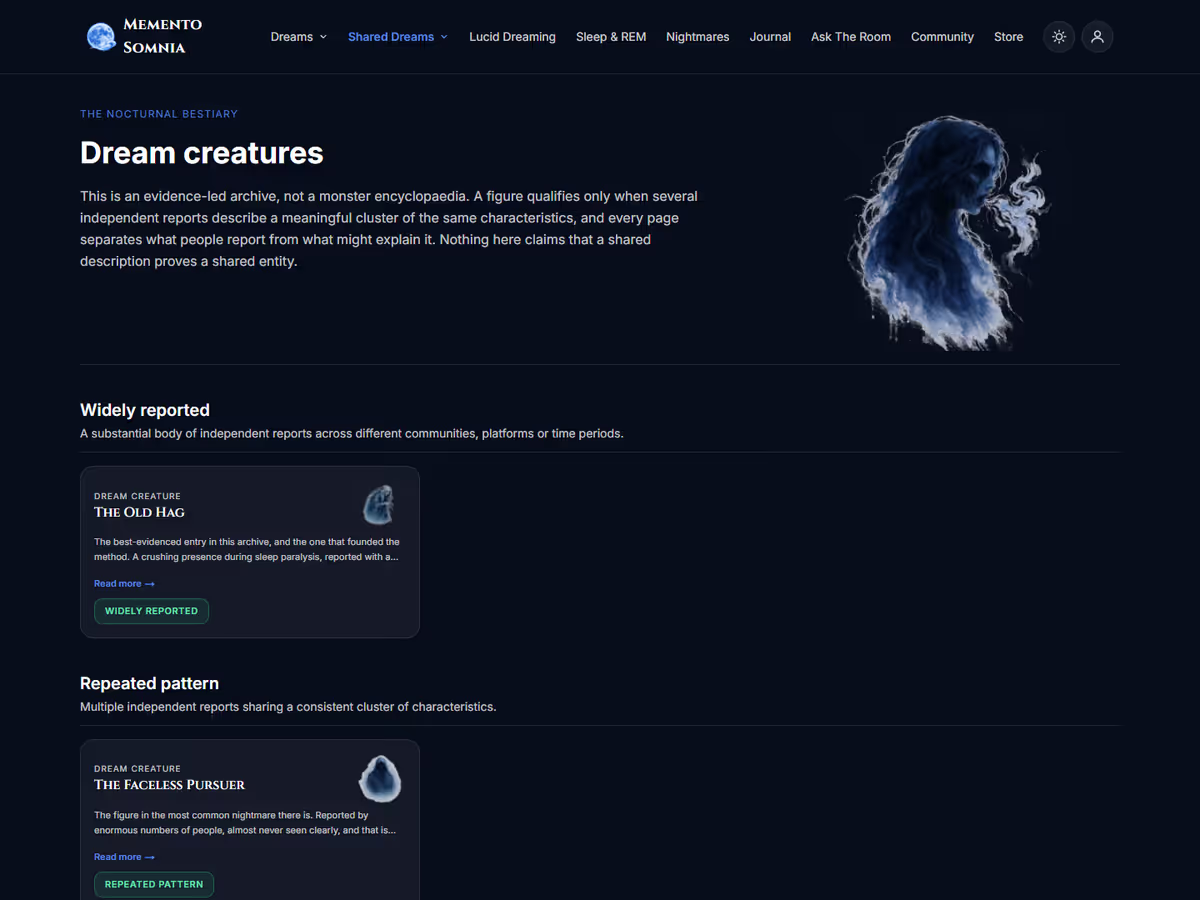
You wake up and you cannot move. There is something in the corner of the room, or sitting on your chest, or standing in the doorway in a hat. Huge numbers of people have had a night like that, and a surprising number of them describe the same visitors. When I built Memento Somnia, a site about dreams and sleep, I knew it needed a home for them. I called it the Nocturnal Bestiary.
A bestiary that does not lie to you
The easy version of this page would be a monster encyclopaedia: spooky pictures, dramatic stories, every figure treated as real. I wanted the opposite. The bestiary is an evidence-led archive. A figure only gets an entry when several independent reports describe the same cluster of characteristics, and every page keeps what people report separate from what might explain it. Nothing on it claims that a shared description proves a shared entity.
Every creature wears a label
Each entry carries a confidence label so you can see at a glance how solid it is: widely reported, repeated pattern, associated with sleep paralysis, influenced by the internet, emerging, or insufficient. Each one cites its sources, lists the sleep states it turns up in (sleep paralysis, falling asleep, waking up, nightmares, lucid dreams), and has a section on what the sleep science says.
Meet a few of them
The Old Hag is the best-evidenced entry in the whole archive, and the one that founded the method: a crushing presence during sleep paralysis, described with the same core features by cultures that had no contact with each other.
The Hat Man is the most famous, a tall dark figure in a brimmed hat. He is also the most interesting case, because his page argues that the evidence is weaker than his reputation. The hat was named and widely shared online before most of the reports appeared, and a wide flat brim is one of the few shapes that still reads clearly as a silhouette in a dark room.
The Faceless Pursuer is the figure in the most common nightmare there is, reported by enormous numbers of people and almost never seen clearly, which is very likely the explanation rather than the mystery. And the Black Dog, a famous figure in folklore, is included on purpose and marked insufficient, as a worked example of an entry that does not meet the standard.
Not everything in the dark is a monster
Alongside the fifteen creatures sit twelve dream protectors: the protective ancestor, the luminous figure, the helpful stranger, the dream guide and others. They get exactly the same treatment, labels and sources included, which felt important. A site that only catalogued the frightening figures would give a strange picture of what people actually dream about.
Have you seen one?
Every creature page has a report form. It asks the questions that make a report useful, including whether you had heard of the figure before you saw it, because a description you already knew is much weaker evidence than one you did not. Reports are reviewed before they count towards an entry. If you would rather keep it to yourself, you can record it privately in your dream journal instead.
If you have ever woken up to something in the room, or you just like a good monster with its evidence attached, come and meet the dream creatures on Memento Somnia. The Hat Man's page is a good place to start.
Building a page that is fun to read and still honest about the evidence was the best part of this project. For the technical side of how the site is made, see the Memento Somnia case study in our portfolio.